Rodent-borne disease ecology
Disease ecology, synanthropy and rodentation
Rodents live alongside people almost everywhere, and many of the pathogens they carry reach us through that closeness. Spillover depends on three things together: the ecology of the pathogen in its rodent hosts, how far a rodent species lives with people, and how people’s land use and buildings create rodent habitat. Most of my work sits somewhere on that triangle.
The rodent-borne zoonotic disease workshop
The annual Rodent-Borne Zoonotic Disease Workshop brings together ecologists, epidemiologists, anthropologists and disease modellers to take a comparative approach to rodent-borne pathogens. I sit on its scientific committee. It was first held in State College, Pennsylvania, in 2023, then in Oslo (2024), Paneveggio, Italy (2025) and Kilpisjärvi, Finland (2026).
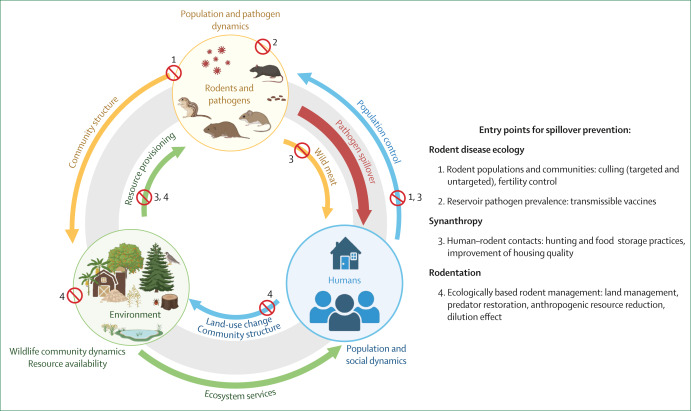
The first workshop produced a Personal View in The Lancet Planetary Health, which sets out three pillars for preventing rodent-borne zoonoses: disease ecology, synanthropy and rodentation, the process by which human activity creates rodent habitat. It argues for integrated, systems-based interventions in place of reactive biomedical ones.
Synanthropy
Synanthropy, how closely a species lives with people, is the pillar I want to develop further. In the ArHa analysis of global sampling records, synanthropy was associated with host status for arenaviruses and hantaviruses independently of sampling effort. In Sierra Leone, the occupancy of Mastomys natalensis rose from forest to village, and in Nigeria, communities describe rodents moving between fields and homes. Open questions include what makes a species synanthropic, how synanthropy varies between populations of the same species, and how it changes the risk of spillover.
Papers
Contact Networks of Small Mammals Highlight Potential Transmission Foci of Mammarenavirus lassaense
Simons D, Goyal R, Bangura U, Gibb R, Rushton B, Sondufu D, et al.
Preprint, 2025 · The American Journal of Tropical Medicine and Hygiene, 2026 · PDF (preprint)
Summary
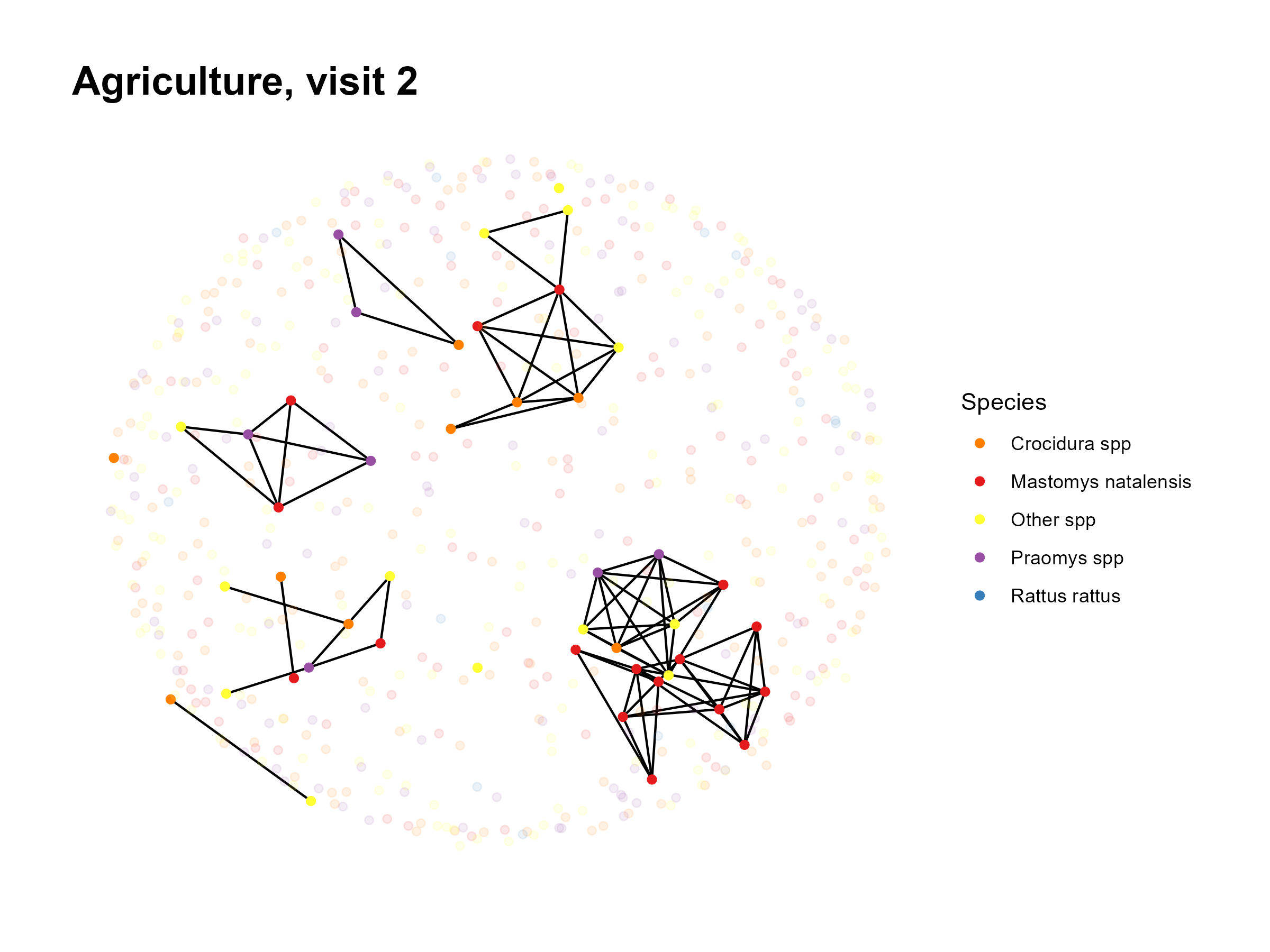
Small-mammal communities in eastern Sierra Leone are structured along land-use gradients, and that structure is expected to shape Lassa mammarenavirus (LASV) transmission among hosts. Whether anthropogenic habitats facilitate transmission within those communities had not been characterised.
Contact networks were reconstructed from 43,226 trap nights yielding 684 rodents and shrews, using co-occurrence in space and time as the edge criterion, and compared across forest, agriculture and village. Communities were larger in villages and agriculture than in forest, but per-individual contact rates were similar across habitats. Network topology differed, with village networks more fragmented than agricultural ones, and intra-specific contact among Mastomys natalensis concentrated in particular settings.
LASV seroprevalence was 5.7% across the community, with antibodies detected in nine rodent and shrew species. Transmission foci are therefore a property of network structure rather than of contact frequency alone, and surveillance restricted to the primary reservoir will miss species contributing to local circulation.
Local Knowledge of Land Use Effects on Human-Rodent Interfaces in Lassa-Endemic Nigeria
Harden C, Eziechina S, Ifebueme NM, Simons D, Moses L, Redding DW, Friant S
EcoHealth, 2026
Summary
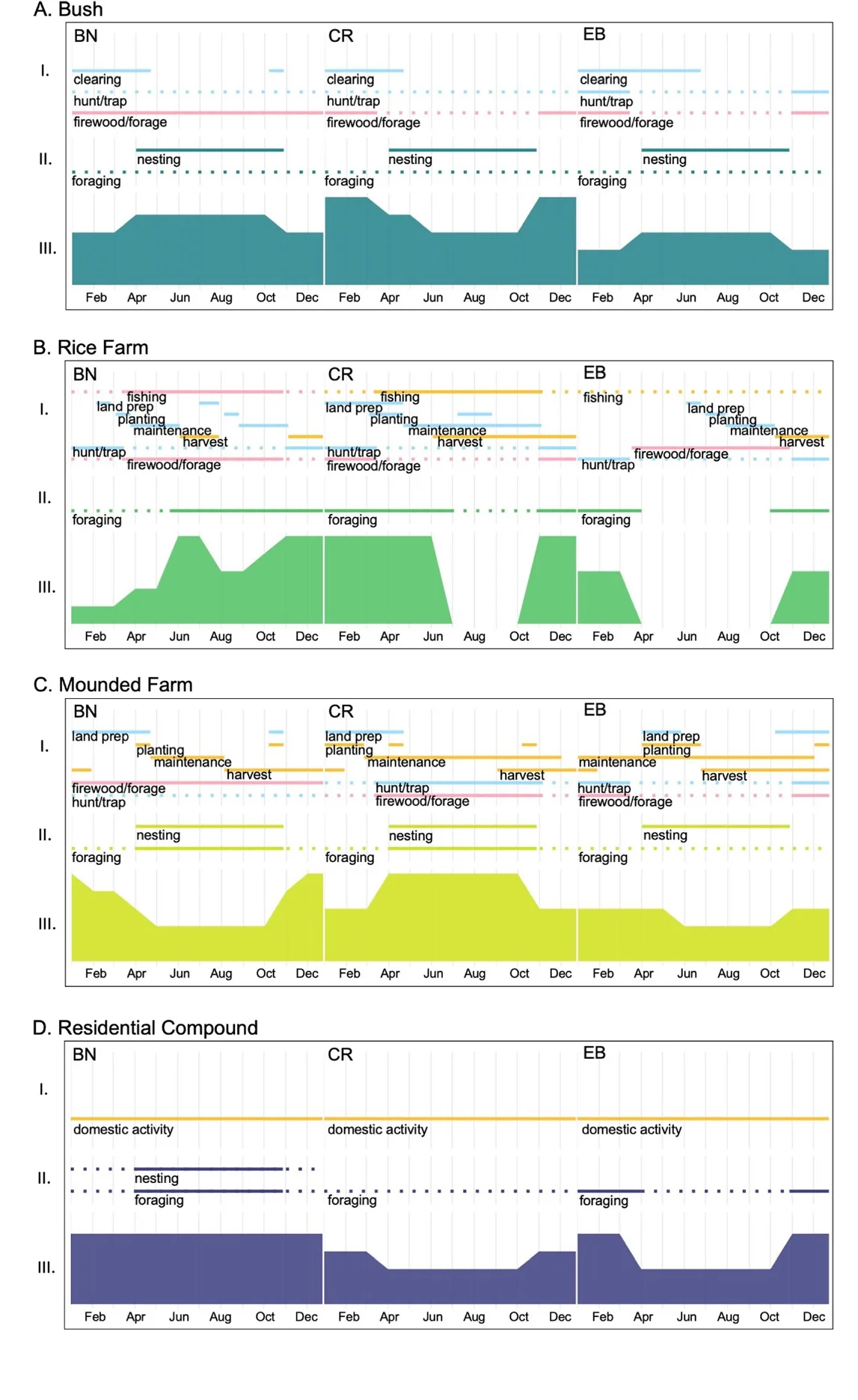
Human contact with Mastomys spp., the reservoir of Mammarenavirus lassaense, is thought to be shaped by settlement pattern and agricultural land use, but how communities perceive and experience that contact had not been characterised across settings in Lassa-endemic Nigeria.
Participatory rural appraisal at three villages with different settlement patterns and landscape structure summarised land cover and agricultural practice, characterised human land use within each land cover type, and identified the types and frequency of contact with suspected Mastomys spp.
All villages reported increased Mastomys activity after seasonal land clearing and the rice harvest. Movement between fields and residential compounds was reported more often where homes were interspersed with farmland. Contact was common in both households and fields, and differed with gendered agricultural duties, suggesting underemphasised pathways for exposure in agricultural settings.
The socio-economic shield limits Lassa virus spillover in urban West Africa
Simons D
Preprint, 2025 · Epidemiology and Infection, 2026 · PDF
Summary
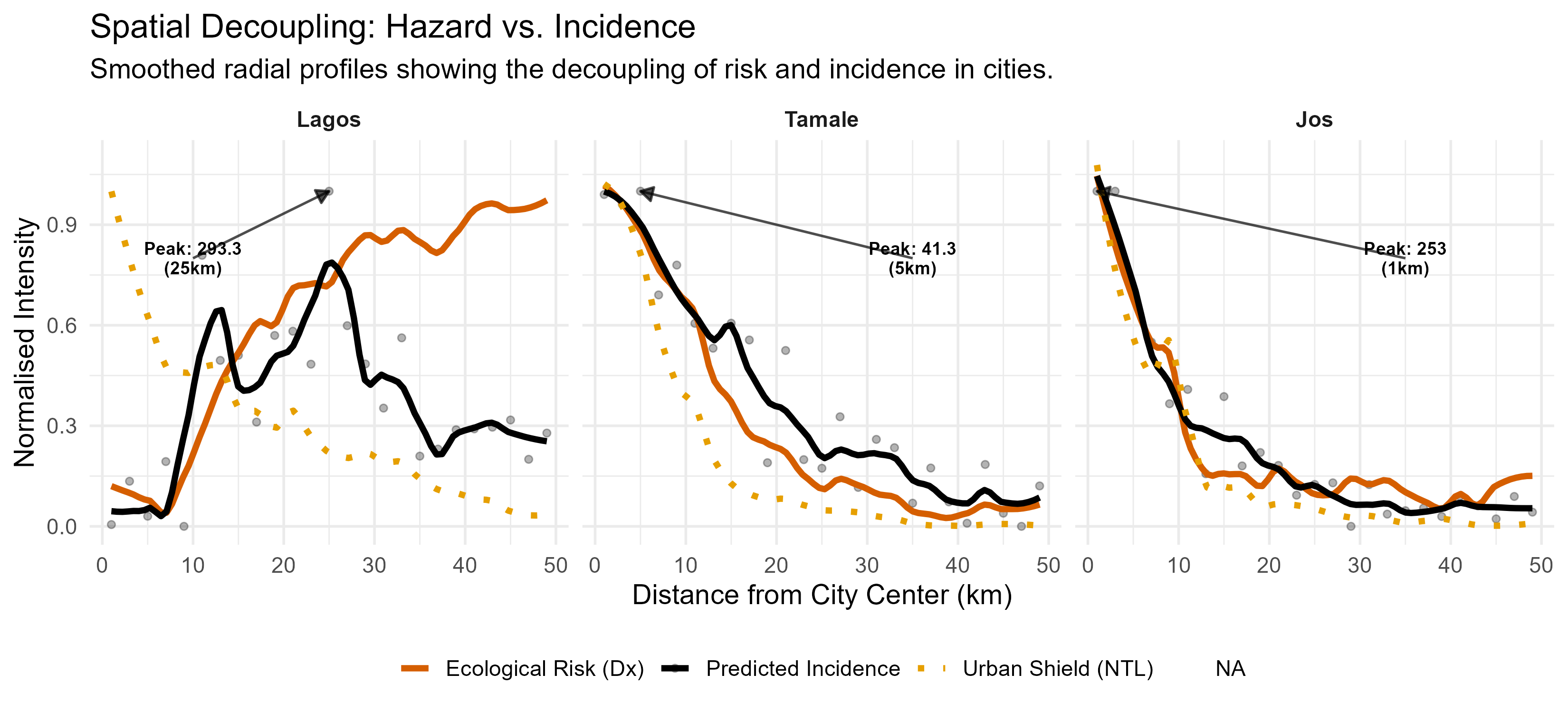
Spatial models of Lassa fever risk have relied on abiotic climatic envelopes for the reservoir host, the natal multimammate mouse Mastomys natalensis, and so predict a rural disease. This paper assesses what changes when biotic interactions and anthropogenic land use are added to the reservoir’s realised niche.
An integrated multi-species occupancy model quantifies co-occurrence between M. natalensis and the invasive commensals Rattus rattus and Mus musculus. With those interactions in the model, M. natalensis persists in peri-urban and human-modified landscapes rather than being competitively excluded, so ecological hazard extends to the urban fringe.
Realised spillover is then modelled with a socio-economic shield, proxied by night-time lights, that dampens transmission non-linearly with urban infrastructure. Hazard and incidence decouple across the city profile. Adjusting for seroreversion and shielding gives a regional burden near 2.6 million infections a year. Validation against clinical data identifies high-suitability districts in Nigeria, Benin and Togo that report no cases, surveillance gaps produced by structural inequality rather than by absence of hazard.
Viral reservoir status in small mammals emerges as a predictable life-history trait after correcting for surveillance bias
Simons D, Rivero R, Rickard G, Martinez-Checa A, Gordon H, Redding DW, Seifert SN
Preprint, 2026
Summary
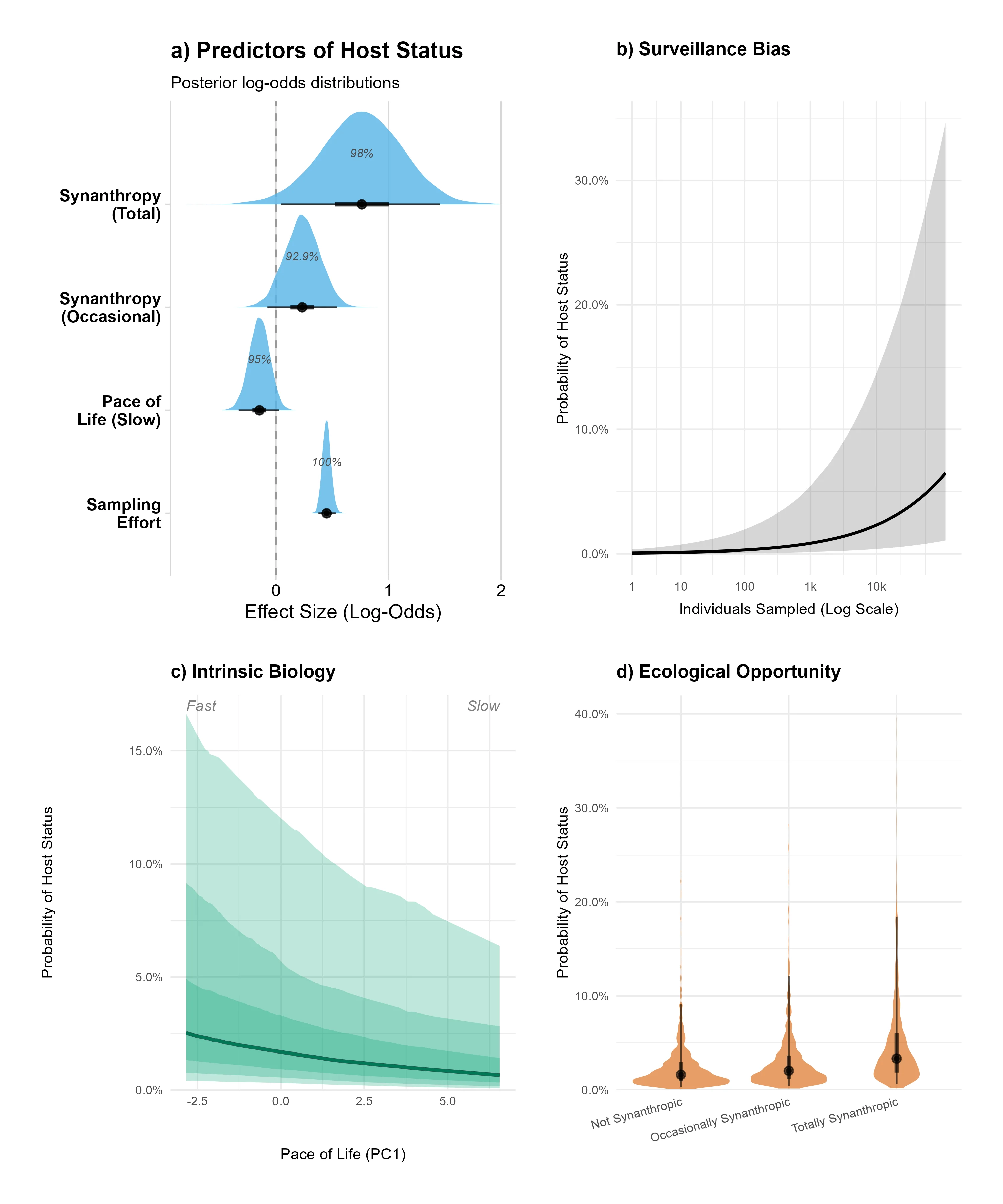
Small mammals are the principal hosts of arenaviruses and hantaviruses, but global surveillance is non-random, so the determinants of host status remain contested. Associations with synanthropy or life history could reflect where and which species have been sampled rather than host biology.
Using the ArHa database, 729 studies and 695,000 diagnostic assays across 637 species were harmonised. Surveillance intensity followed night-time light intensity and accessibility rather than local host richness, and 46% of rodent genera have never been sampled. Bayesian phylogenetic mixed models of 43,677 host–virus pairs, adjusted for sampling effort, estimate that faster-lived species tended to be detected as hosts more often, though the credible interval included zero (pd 93.2%). Synanthropy was independently associated with host status, with obligate commensals at about twice the odds. Predictions discriminated hosts in withheld continents (AUC 0.81 to 0.88).
Projected globally, community host probability varied largely independently of species richness (R² = 0.028). Host and virus phylogenies were congruent, with host switching alongside co-divergence.
Land use gradients drive spatial variation in Lassa fever host communities in the Eastern Province of Sierra Leone
Simons D, Gibb R, Bangura U, Sondufu D, Lamin J, Koninga J, et al.
Preprint, 2025 · Journal of Animal Ecology, 2025 · PDF (preprint)
Summary
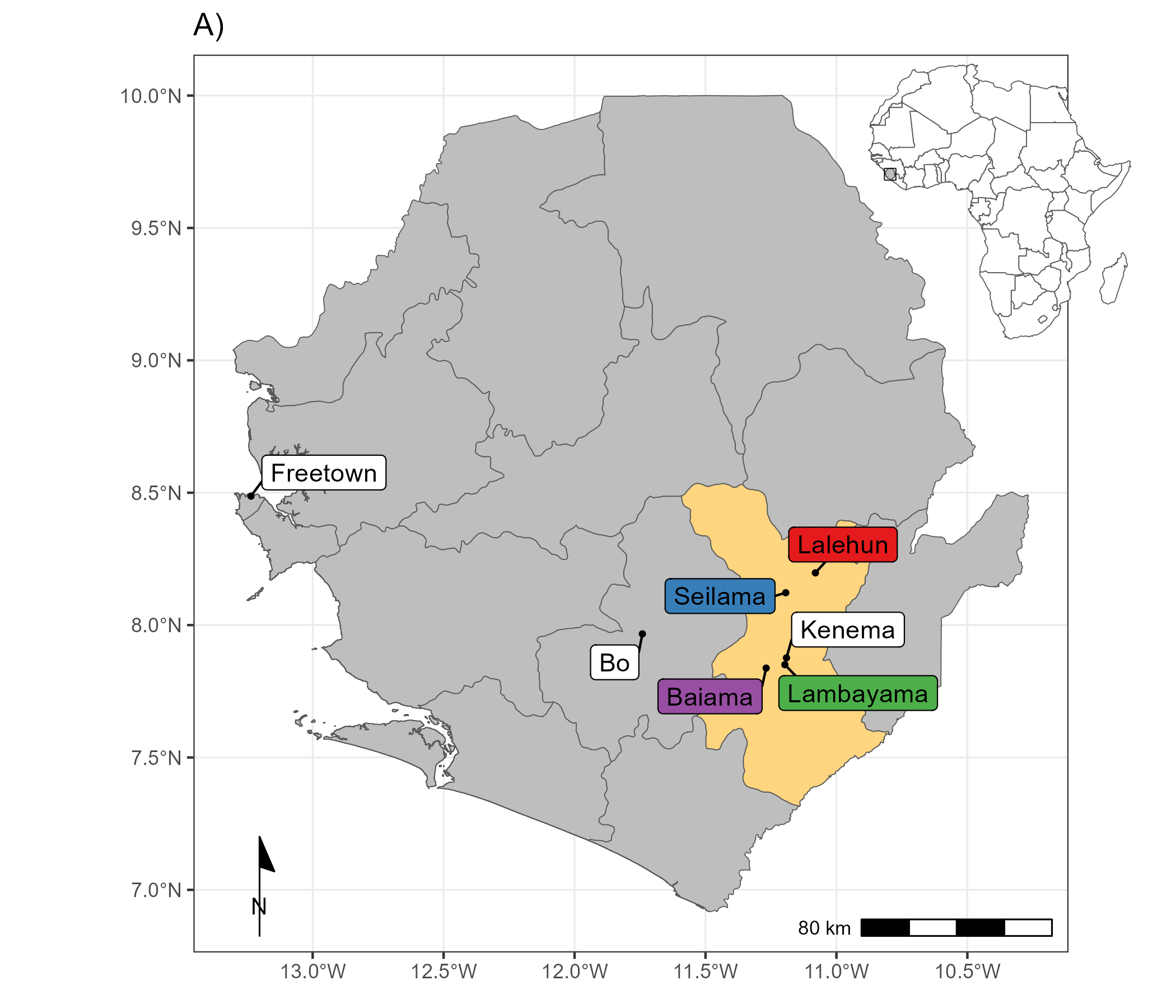
The natal multimammate mouse Mastomys natalensis is the primary reservoir of Lassa mammarenavirus. Its occurrence and abundance are regulated by the human environment and by biotic interactions with other small mammals, but those drivers are poorly described in the regions where Lassa fever outbreaks occur.
A Bayesian multi-species occupancy model incorporating imperfect detection was fitted to a four-year trapping study in eastern Sierra Leone, spanning forest, agriculture and settlement. M. natalensis occupancy increased along the gradient from forest to agriculture to village, but was lower in peri-urban than in rural settings. Presence of Mus musculus was associated with reduced M. natalensis occupancy in peri-urban sites. No equivalent effect of Rattus rattus was observed in rural sites.
Land use and community dynamics together generate spatial heterogeneity in the reservoir population, a plausible contributor to lower Lassa fever incidence in urban areas. Characterising the whole small-mammal community, above all under rapid land-use change, is needed to assess spillover risk beyond the primary host.
Reducing the threats of rodent-borne zoonoses requires an understanding and leveraging of three key pillars: disease ecology, synanthropy, and rodentation
Friant S, Mistrick J, Luis AD, Harden C, Simons D, Fichet-Calvet E, et al.
The Lancet Planetary Health, 2025
Summary
Control of rodent-borne zoonoses has concentrated on treating human disease and on killing rodents, neither of which addresses the processes that bring hosts and people together. Endemic and emerging rodent infections continue to cause substantial morbidity in low-income and middle-income countries.
This Personal View in The Lancet Planetary Health, from the annual Rodent-Borne Zoonoses workshop, organises prevention around three pillars. Disease ecology determines which species carry which pathogens and how infection is maintained. Synanthropy describes the degree to which species live alongside people, and so sets the rate of contact. Rodentation, the growth and spread of commensal rodent populations under human land use, links the first two to anthropogenic change.
A conceptual model maps the interactions and feedbacks between rodent ecology, human behaviour and ecological context, identifying where intervention has immediate and downstream effects. Settlement and land-use change alter predator and resource availability, which modulates rodent populations and thereby spillover, so control designed at the level of the system should outperform reactive rodenticide campaigns.
Rodent trapping studies as an overlooked information source for understanding endemic and novel zoonotic spillover
Simons D, Attfield LA, Jones KE, Watson-Jones D, Kock R
Preprint, 2022 · PLOS Neglected Tropical Diseases, 2023 · PDF
Summary
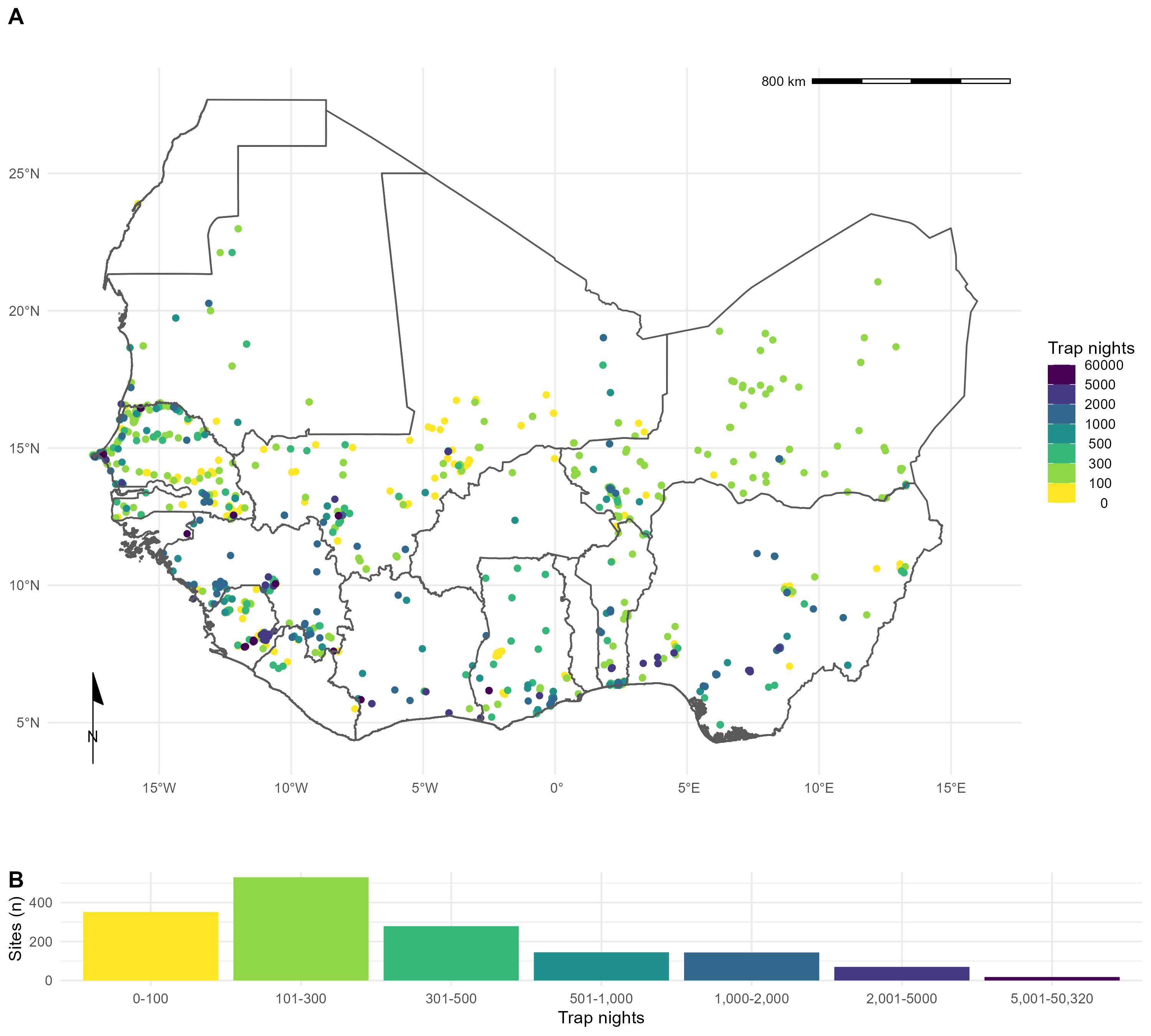
Spatial risk for rodent-borne zoonoses is usually delimited from host range maps and occurrence records drawn from the IUCN Red List and the Global Biodiversity Information Facility. Rodent trapping studies hold complementary information, including non-detection, but had not been synthesised into a reusable dataset.
A systematic search across seven bibliographic databases and the grey literature identified 127 trapping studies from 14 West African countries, comprising 1,611 sites and an estimated 942,629 trap nights, with 76,275 small mammals trapped and 132 species identified. Adjusted for area, trapping effort is spatially biased towards high human population density and urban land cover, leaving much of Burkina Faso, Côte d’Ivoire, Ghana and northern Nigeria under-sampled.
Trapping records supply non-detection that range maps cannot, and are more informative than IUCN ranges for invasive species such as Mus musculus. Consolidating trapping, occurrence and range data gives better coverage of a species’ detection and non-detection range than any source alone. The dataset is archived openly for reuse.
The niche of One Health approaches in Lassa fever surveillance and control
Arruda LB, Haider N, Olayemi A, Simons D, Ehichioya D, Yinka-Ogunleye A, et al.
Annals of Clinical Microbiology and Antimicrobials, 2021 · PDF
Summary
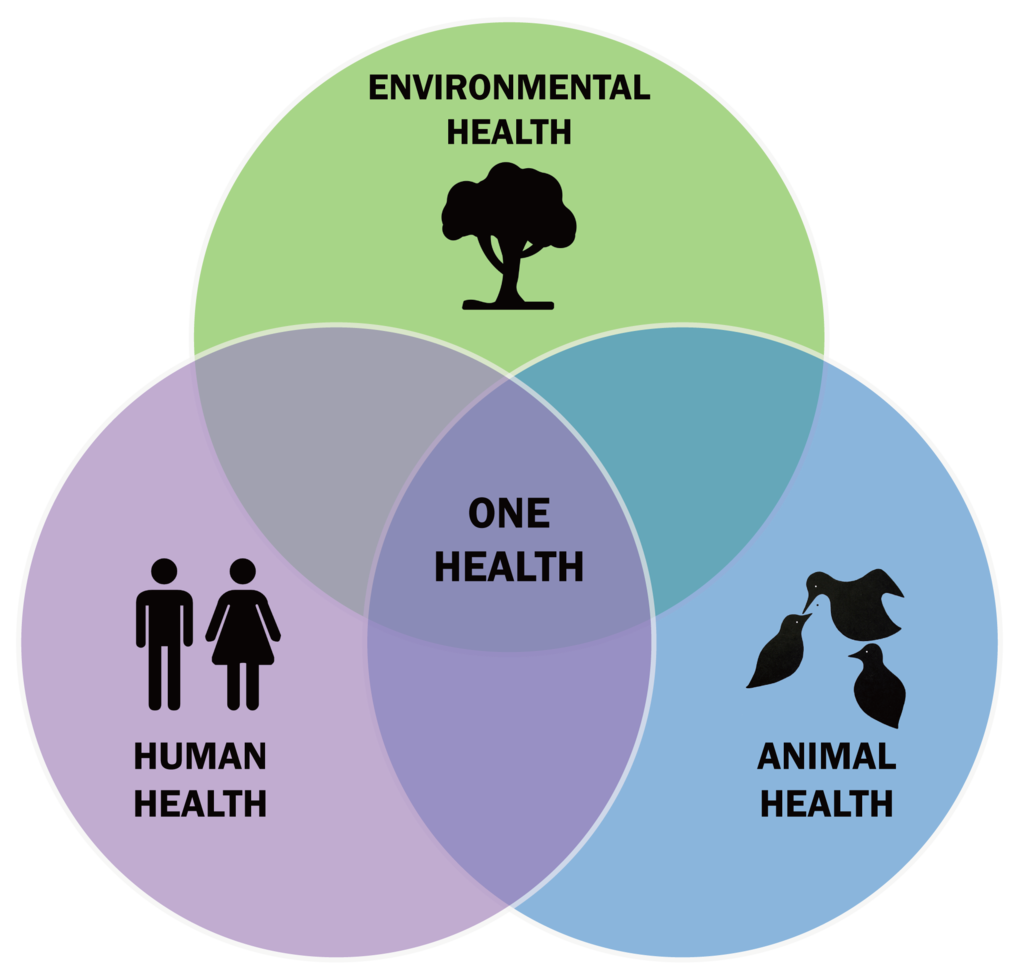
Human exposure to Lassa mammarenavirus depends on reservoir ecology, which is shaped by seasonality and by virus and host genetics, and on the human behaviours that bring people into contact with rodents. Burden estimates still rest on work from the 1980s, before the population growth and diagnostic changes of the intervening decades.
This review, written within the PANDORA-ID-NET consortium, examines where One Health approaches can act on the drivers of spillover rather than on its consequences. It works through the ecological determinants of reservoir distribution and infection, the behavioural and structural determinants of human exposure, and the surveillance and diagnostic gaps that keep burden uncertain, identifying candidate intervention points in each.
Its conclusion is that the true impact of Lassa fever in West African communities will only be established through sustained interdisciplinary work across human, animal and environmental health, rather than through any single discipline’s data.
Last updated 5 October 2026