Host ecology in Sierra Leone
Small-mammal communities along a land-use gradient
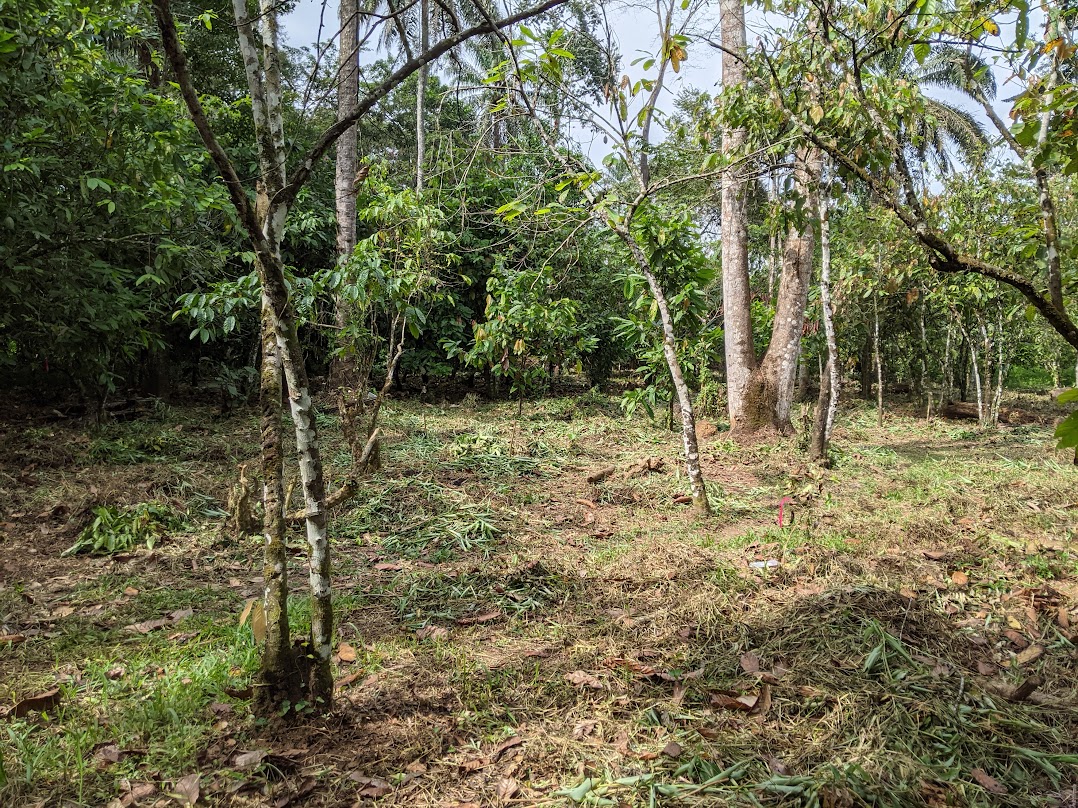
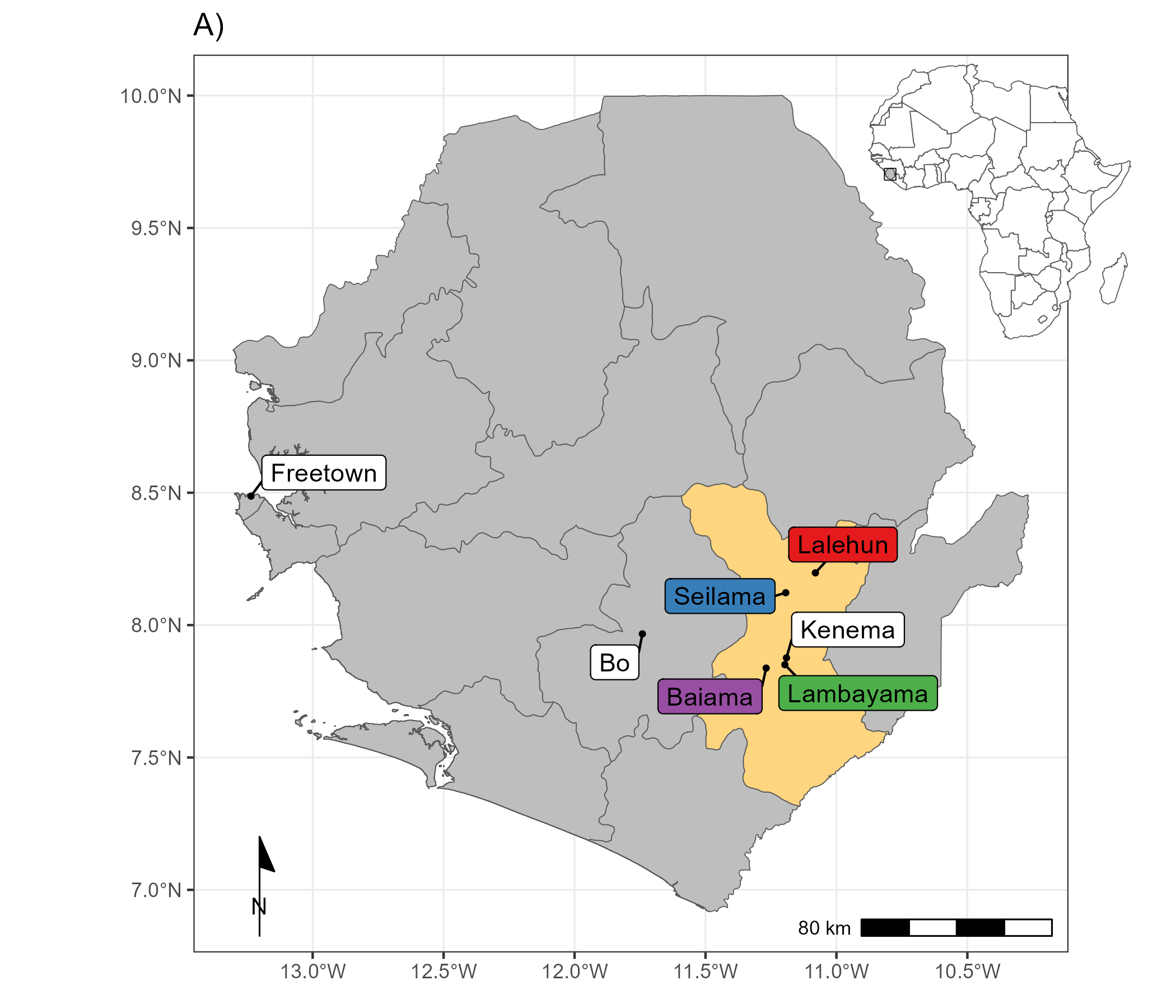
My doctoral fieldwork trapped small mammals at four villages around Kenema, in the Eastern Province of Sierra Leone, from 2020 to 2023. At each village, trapping ran along a land-use gradient from forest through agriculture into houses. Over 43,226 trap nights, the study asked how land use structures small-mammal communities, and what that structure means for Mammarenavirus lassaense in its reservoir, Mastomys natalensis.
The work was a collaboration between the Royal Veterinary College, University College London, the London School of Hygiene and Tropical Medicine, Njala University, Kenema Government Hospital and the Bernhard Nocht Institute for Tropical Medicine.
43,226 trap nights across four villages, 2020 to 2023
684 rodents and shrews detected
5.7% Lassa virus seroprevalence across the small-mammal community
Study design
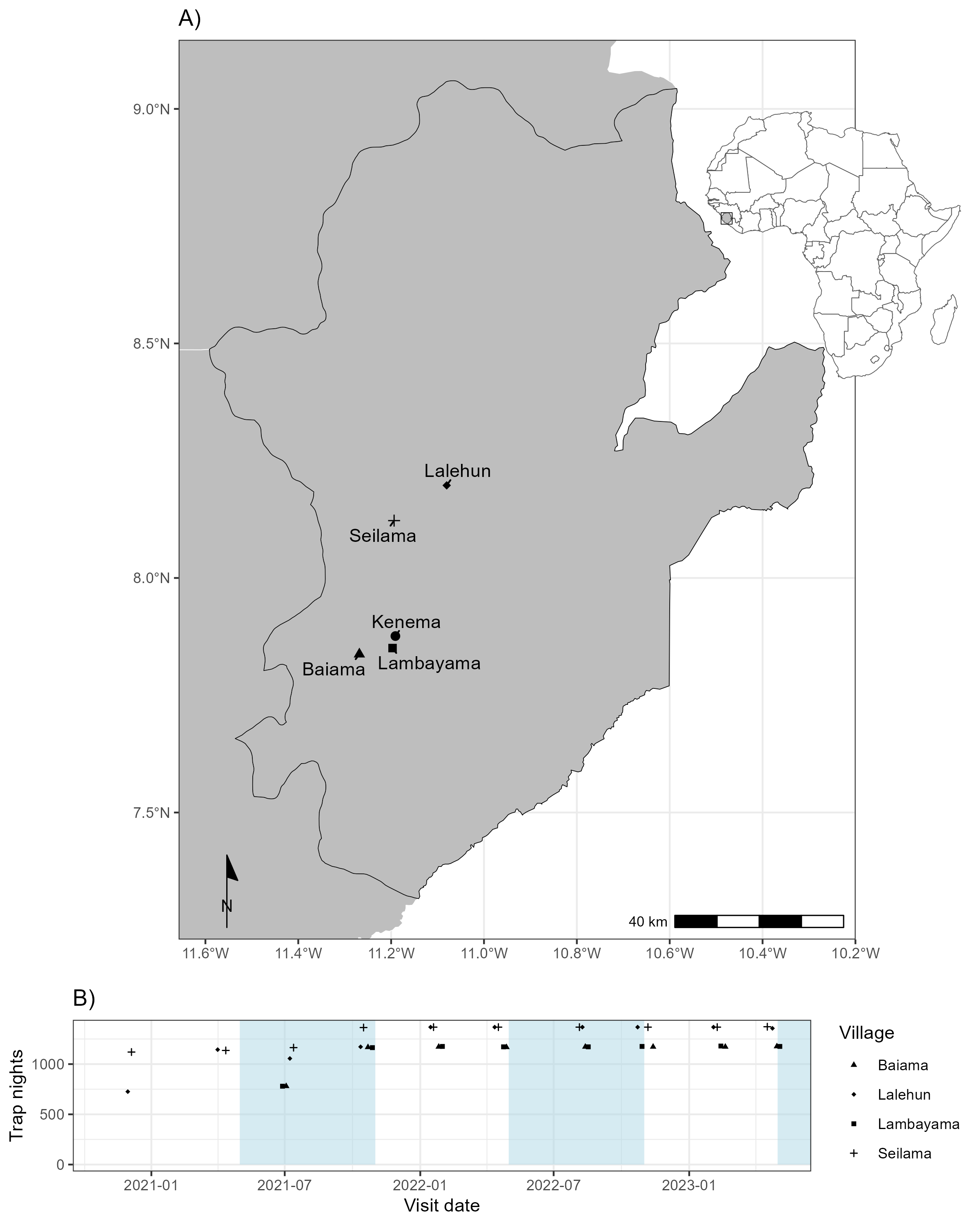
The protocol was registered on the Open Science Framework before the pilot session in November 2020. Field data were collected with Open Data Kit. Lambayama, on the edge of Kenema, gives a peri-urban comparison with the three rural villages.
Findings
- Land use and the reservoir. Occupancy of Mastomys natalensis rose along the gradient from forest through agriculture to villages. It was lower in the peri-urban village than in rural ones. In the peri-urban village, the presence of the invasive Mus musculus was associated with reduced occupancy. Paper.
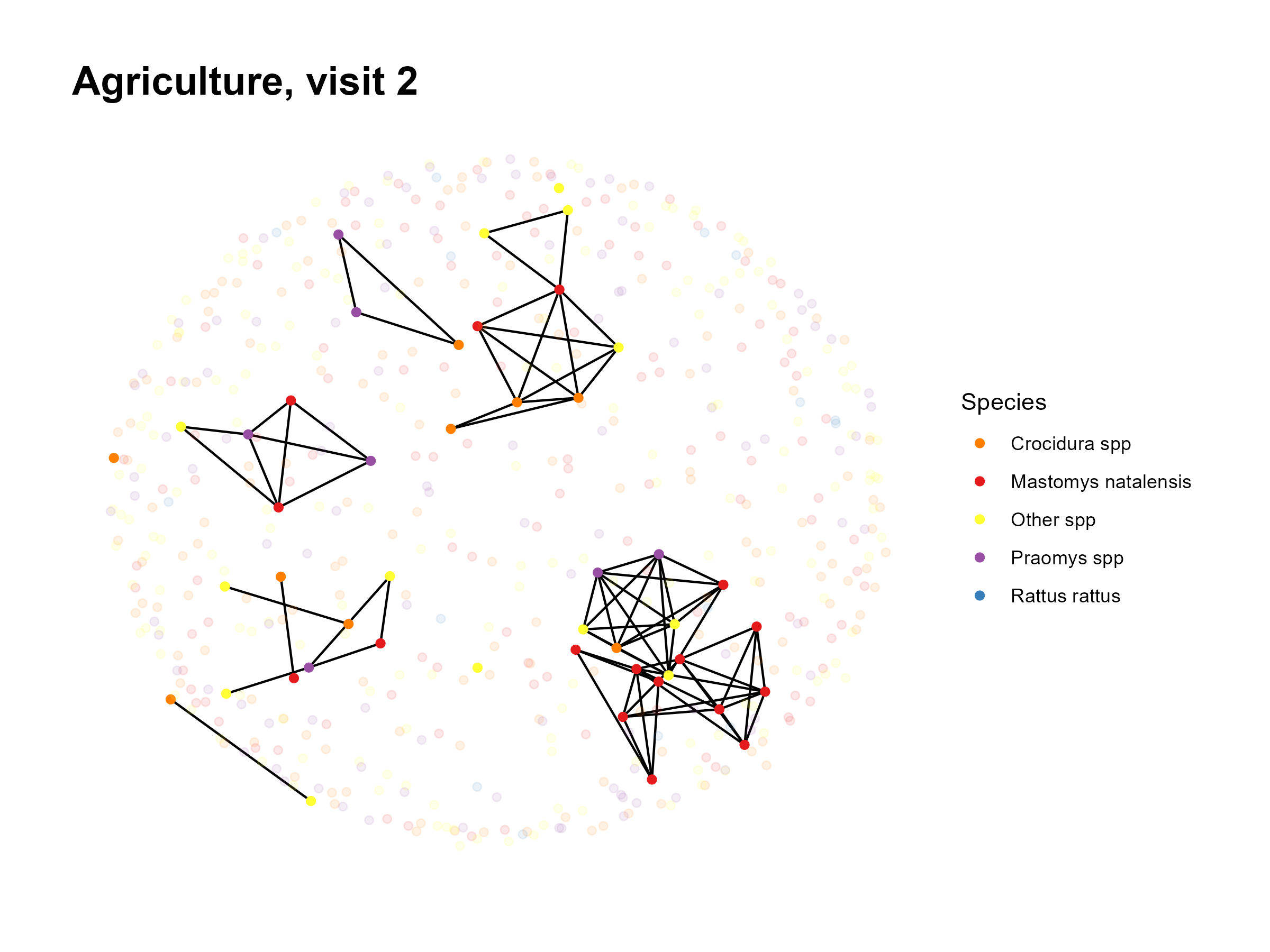
- Contact networks. Contact networks reconstructed from co-trapping were larger in villages and agriculture than in forest. Antibodies to Mammarenavirus lassaense were found in nine rodent and shrew species, at an overall seroprevalence of 5.7%, so surveillance restricted to M. natalensis would miss species that may contribute to local circulation. Paper. The bank vole project at Uppsala continues this work, using gut microbiome similarity to trace contact in wild rodent populations.
- Trapping studies as data. A review of 127 rodent trapping studies across West Africa found trapping effort biased towards densely populated areas. Trapping records add the non-detections that range maps and occurrence databases lack. Paper. Project ArHa extends this synthesis worldwide, for arenaviruses and hantaviruses.
Inside houses
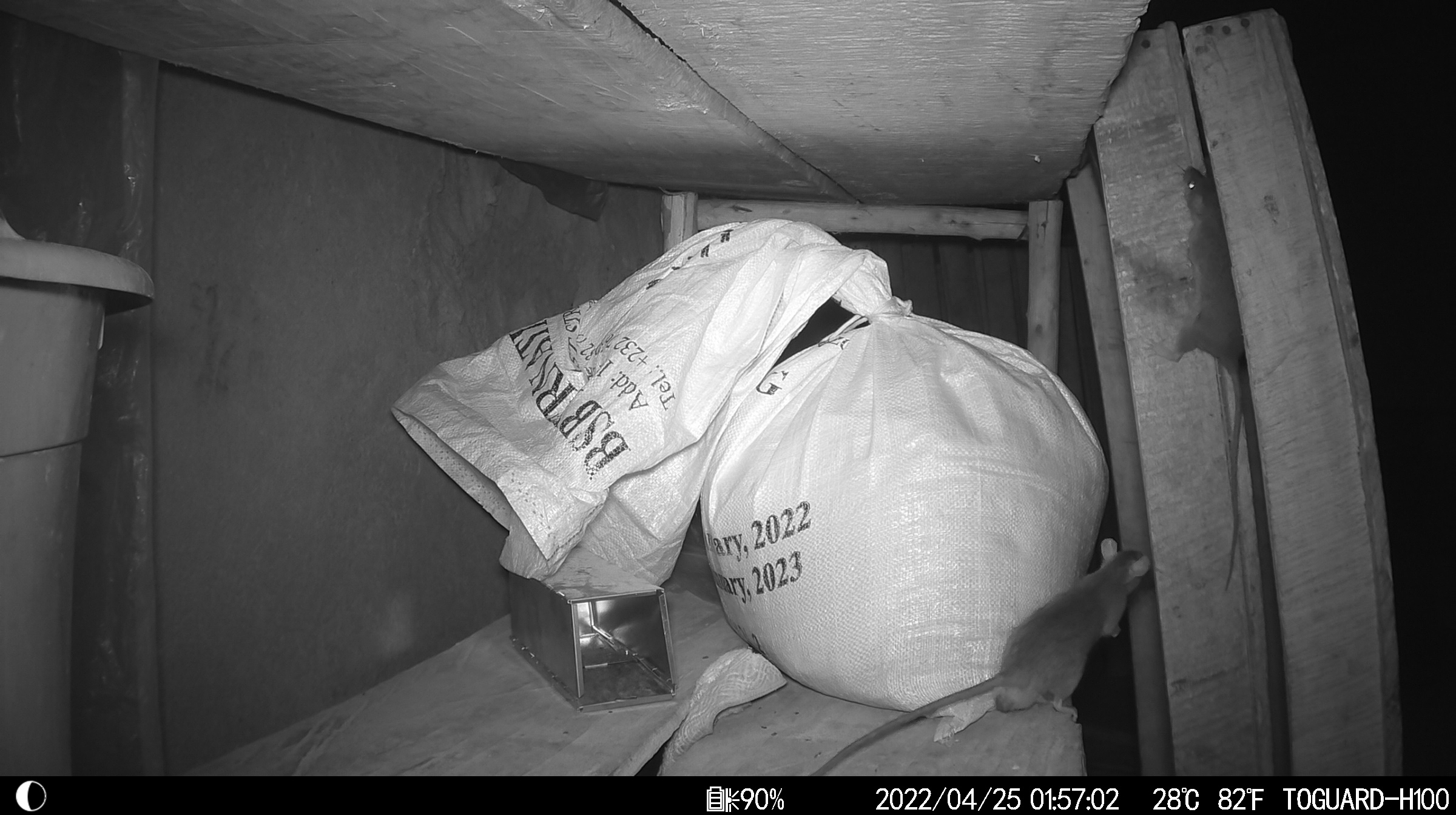
Camera traps set alongside the trapping, with Najmul Haider, recorded rodents inside houses.
Papers
Contact Networks of Small Mammals Highlight Potential Transmission Foci of Mammarenavirus lassaense
Simons D, Goyal R, Bangura U, Gibb R, Rushton B, Sondufu D, et al.
Preprint, 2025 · The American Journal of Tropical Medicine and Hygiene, 2026 · PDF (preprint)
Summary
Small-mammal communities in eastern Sierra Leone are structured along land-use gradients, and that structure is expected to shape Lassa mammarenavirus (LASV) transmission among hosts. Whether anthropogenic habitats facilitate transmission within those communities had not been characterised.
Contact networks were reconstructed from 43,226 trap nights yielding 684 rodents and shrews, using co-occurrence in space and time as the edge criterion, and compared across forest, agriculture and village. Communities were larger in villages and agriculture than in forest, but per-individual contact rates were similar across habitats. Network topology differed, with village networks more fragmented than agricultural ones, and intra-specific contact among Mastomys natalensis concentrated in particular settings.
LASV seroprevalence was 5.7% across the community, with antibodies detected in nine rodent and shrew species. Transmission foci are therefore a property of network structure rather than of contact frequency alone, and surveillance restricted to the primary reservoir will miss species contributing to local circulation.
Land use gradients drive spatial variation in Lassa fever host communities in the Eastern Province of Sierra Leone
Simons D, Gibb R, Bangura U, Sondufu D, Lamin J, Koninga J, et al.
Preprint, 2025 · Journal of Animal Ecology, 2025 · PDF (preprint)
Summary
The natal multimammate mouse Mastomys natalensis is the primary reservoir of Lassa mammarenavirus. Its occurrence and abundance are regulated by the human environment and by biotic interactions with other small mammals, but those drivers are poorly described in the regions where Lassa fever outbreaks occur.
A Bayesian multi-species occupancy model incorporating imperfect detection was fitted to a four-year trapping study in eastern Sierra Leone, spanning forest, agriculture and settlement. M. natalensis occupancy increased along the gradient from forest to agriculture to village, but was lower in peri-urban than in rural settings. Presence of Mus musculus was associated with reduced M. natalensis occupancy in peri-urban sites. No equivalent effect of Rattus rattus was observed in rural sites.
Land use and community dynamics together generate spatial heterogeneity in the reservoir population, a plausible contributor to lower Lassa fever incidence in urban areas. Characterising the whole small-mammal community, above all under rapid land-use change, is needed to assess spillover risk beyond the primary host.
A dataset of small-mammal detections in West Africa and their associated micro-organisms
Simons D, Attfield LA, Jones KE, Watson-Jones D, Kock R
Preprint, 2023 · Gigabyte, 2023 · PDF
Rodent trapping studies as an overlooked information source for understanding endemic and novel zoonotic spillover
Simons D, Attfield LA, Jones KE, Watson-Jones D, Kock R
Preprint, 2022 · PLOS Neglected Tropical Diseases, 2023 · PDF
Summary
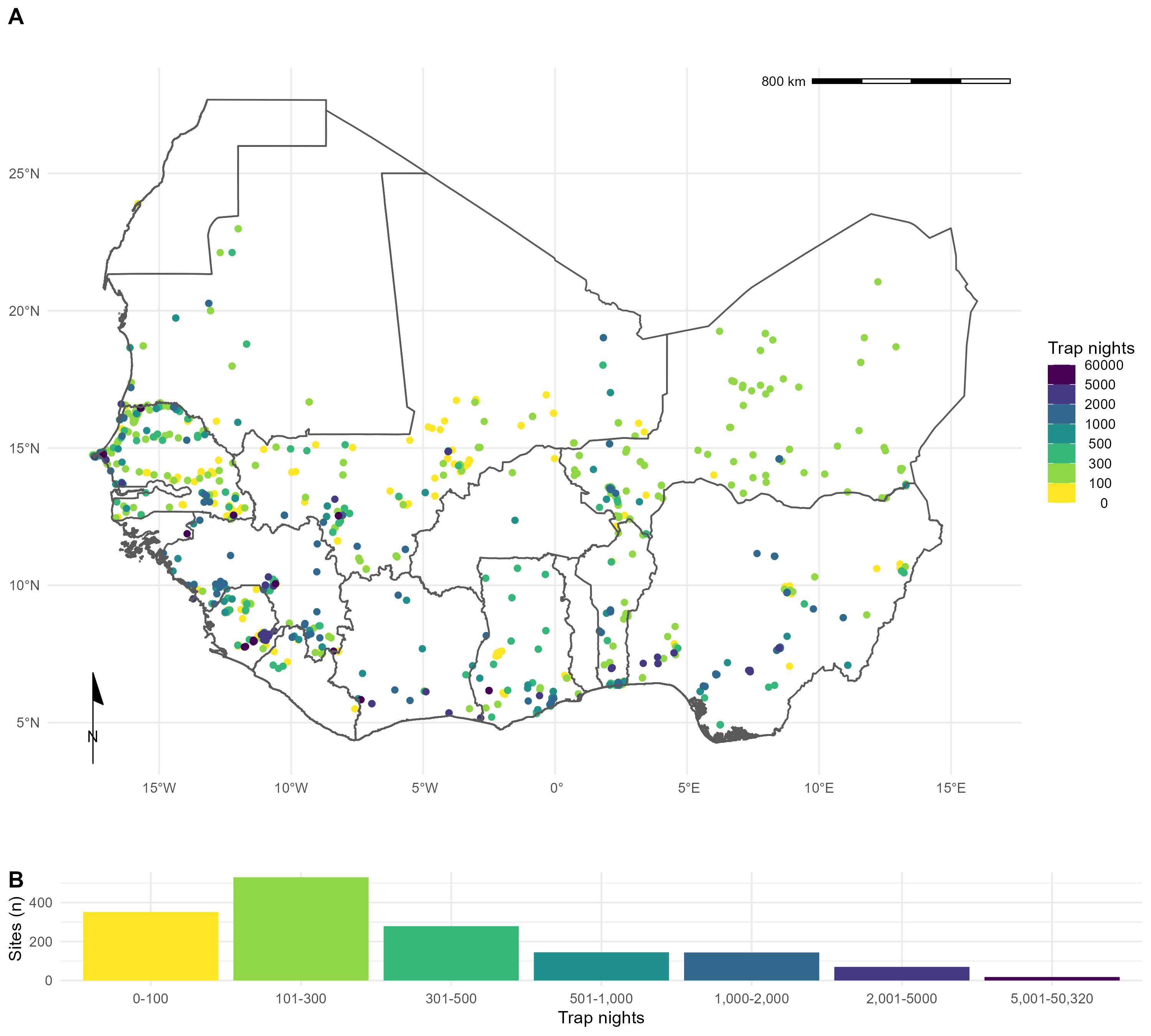
Spatial risk for rodent-borne zoonoses is usually delimited from host range maps and occurrence records drawn from the IUCN Red List and the Global Biodiversity Information Facility. Rodent trapping studies hold complementary information, including non-detection, but had not been synthesised into a reusable dataset.
A systematic search across seven bibliographic databases and the grey literature identified 127 trapping studies from 14 West African countries, comprising 1,611 sites and an estimated 942,629 trap nights, with 76,275 small mammals trapped and 132 species identified. Adjusted for area, trapping effort is spatially biased towards high human population density and urban land cover, leaving much of Burkina Faso, Côte d’Ivoire, Ghana and northern Nigeria under-sampled.
Trapping records supply non-detection that range maps cannot, and are more informative than IUCN ranges for invasive species such as Mus musculus. Consolidating trapping, occurrence and range data gives better coverage of a species’ detection and non-detection range than any source alone. The dataset is archived openly for reuse.
Data and code
- Individual-level data. Records of the small mammals trapped and tested in the study are on PHAROS.
- Land use and host communities. Code and data on GitHub.
- Contact networks. Code and data on GitHub.
- Review of rodent trapping studies. The dataset is on Zenodo, the code on GitHub, and an app explores the records. The dataset is described in a data paper in GigaByte, listed below.
Talks
- Ecology and Evolution of Infectious Diseases, 2022. Results from the first year of trapping. Watch the talk or read the slides.
- American Society of Tropical Medicine and Hygiene, Chicago, 2023. Contact networks. Slides.
- Second Lassa Fever International Conference, Abidjan, 2025. Contact networks. Slides.
- Ecology and Evolution of Infectious Diseases, 2021. The review of rodent trapping studies. Poster.
Last updated 5 October 2026