Vaccines and trial design
Getting vaccines for zoonotic pathogens through the pipeline
Vaccine trials for zoonotic pathogens face a problem that trials for pathogens spread between people do not. Efficacy is measured against incident infection, and infection arrives from wildlife at times and places that are hard to predict. Ecology must be part of a trial’s design, not its background.
This is the direction I want my work to take: using what we know about reservoirs and human exposure to make trials of Lassa fever vaccines answerable, and doing the same for the next priority pathogen. A grant application to fund this work is under review.
One Health trial design
A commentary in Nature Medicine sets out a One Health trial design for Lassa fever vaccines, with ecological and social data entering at three stages. Viral diversity across the reservoir’s range informs antigen selection. Reservoir distribution models and data on human–rodent contact guide the choice of sites with enough incident infection. Variation in exposure, from household rodent contact to occupation, enters the evaluation of vaccine performance.
Choosing trial sites
Two lines of work feed site selection directly.
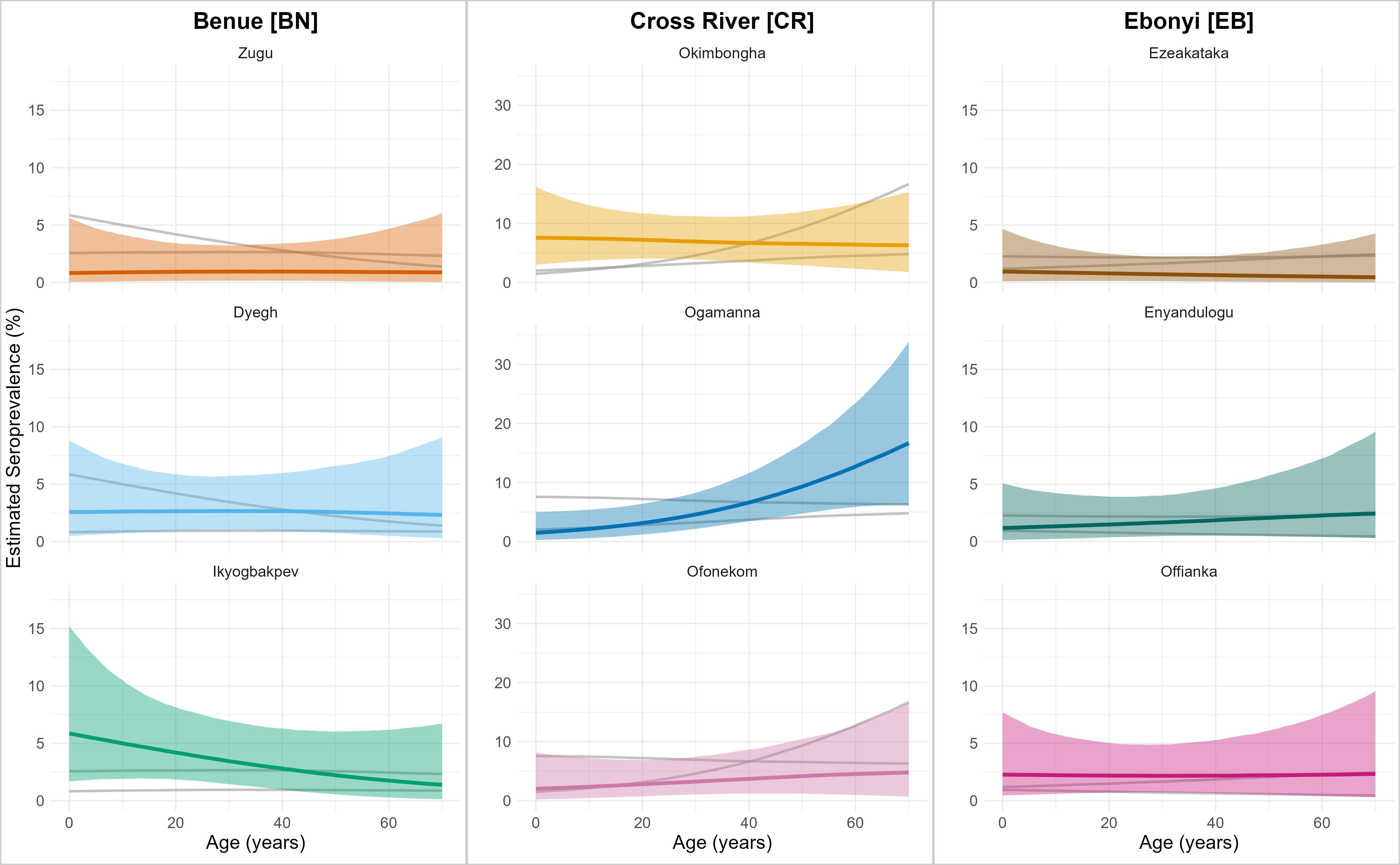
- Exposure varies between neighbouring villages. The SCAPES serosurvey found Lassa virus seroprevalence from under 1% to over 6% between villages close together, with no strong behavioural predictor. Sites need active serosurveillance, not regional incidence maps.
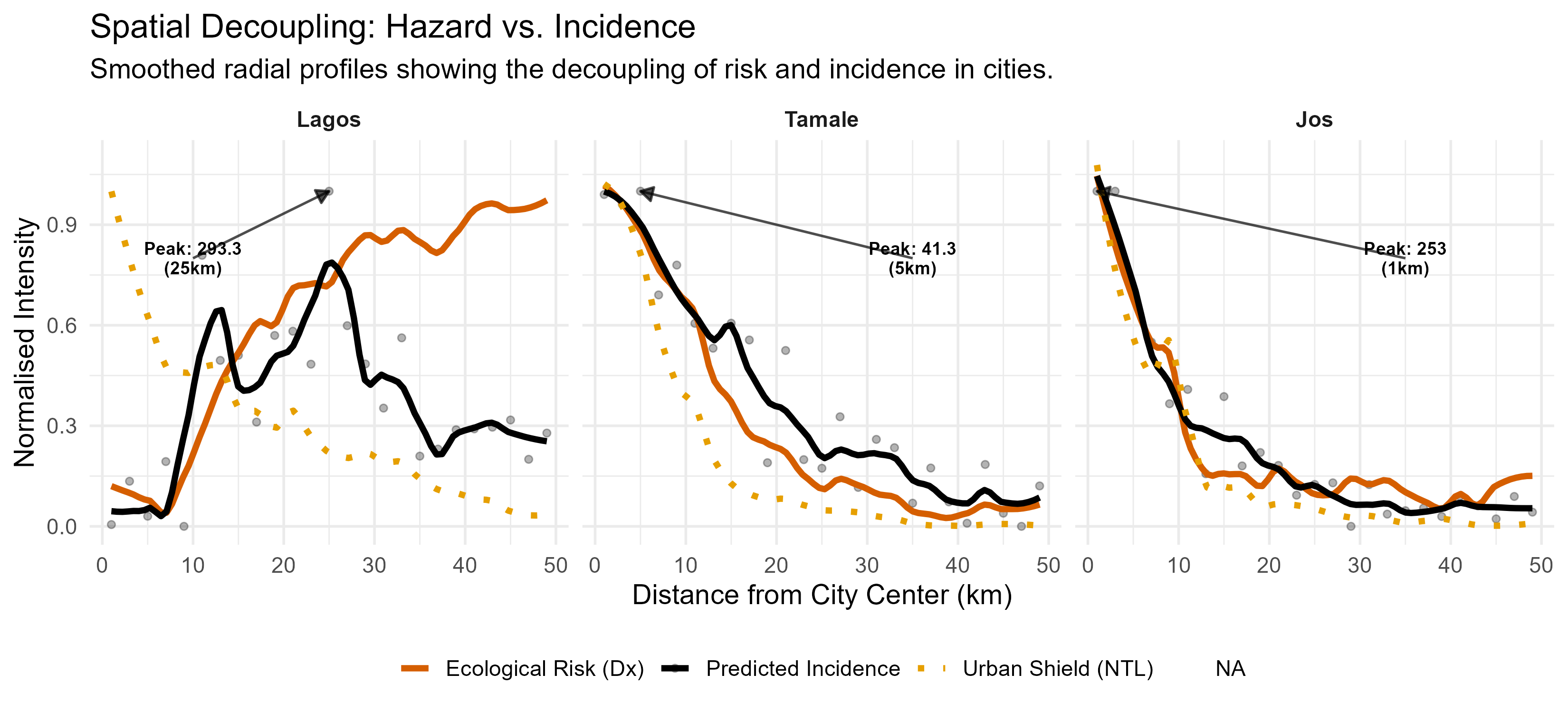
- Infection without reported cases. The socio-economic shield model identifies districts with high predicted infection and no reported cases. These are candidates for serosurveys before a trial, not places to rule out.
Transmissible vaccines
Vaccinating the reservoir could prevent spillover at source. A policy forum in Science, from an interdisciplinary workshop, sets out design commitments for self-disseminating vaccines, which spread between hosts: host-restricted vectors, designs that limit themselves, and staged field evaluation with the consent of affected communities. Candidate vaccines for rabies and Lassa fever are still in development, so these choices can be made now.
Papers
A One Health trial design to accelerate Lassa fever vaccines
Simons D, Watson-Jones D, Manno D, Friant S
Nature Medicine, 2026 · PDF
Summary
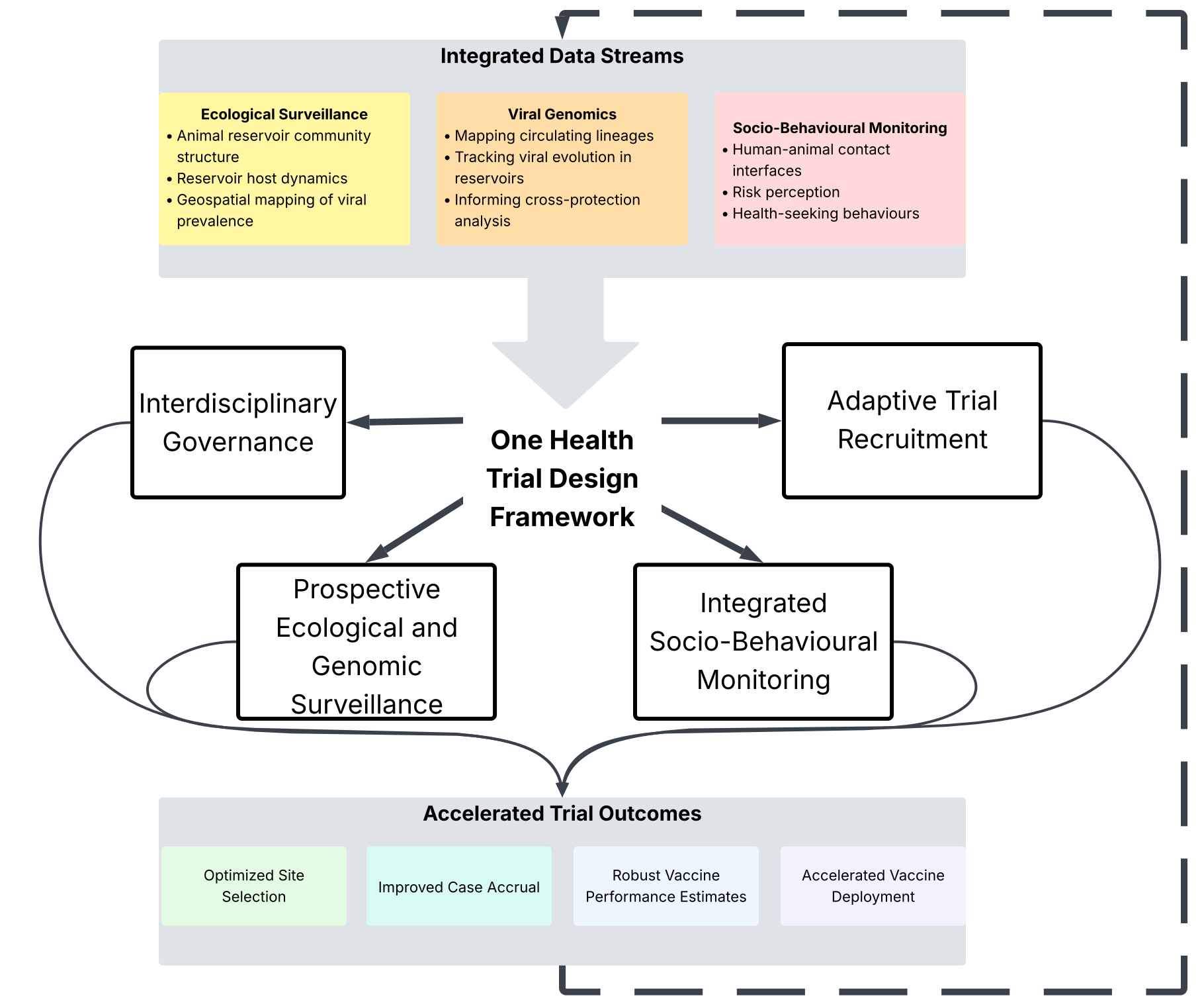
Vaccine trials for zoonotic pathogens face a structural problem. Efficacy endpoints depend on incident infection at trial sites, and spillover from wildlife is spatially and temporally unpredictable. For Lassa fever this uncertainty has slowed candidate vaccines through the pipeline.
This commentary in Nature Medicine sets out a One Health Trial Design in which ecological and social data are integrated at three stages. Viral phylogenetic diversity across the reservoir’s range informs antigen selection. Reservoir distribution models and human-rodent contact data support the choice of sites where attack rates will be sufficient. Heterogeneity in exposure, from household rodent contact to occupation, enters the evaluation of vaccine performance.
Lassa fever is the case study, but the framework is generic to pathogens with a wildlife reservoir and offers a template for preparedness against priority zoonoses.
Local heterogeneity in Lassa fever serology in rural Nigeria: Implications for vaccine trial site selection
Simons D, Harden C, Imirzian N, Thompson KET, Ifebueme NM, Eziechina S, et al.
Preprint, 2025 · PLOS Neglected Tropical Diseases, 2026
Summary
Lassa virus vaccine candidates entering efficacy trials need sites with ongoing transmission, but spillover is unpredictable and passive case detection at sentinel hospitals misses mild infection and asymptomatic seroconversion. This cross-sectional serosurvey estimates exposure directly across nine villages in Benue, Ebonyi and Cross River states, Nigeria.
Among 1,874 participants tested for LASV IgG by ELISA, overall seroprevalence was 3.2%, with marked fine-scale heterogeneity: village estimates ranged from under 1% to over 6% between communities in close proximity. Of 21 candidate risk factors, including rodent consumption, agricultural practice and household environment, none showed strong or consistent association, plausibly reflecting the low event rate and near-ubiquitous exposure, with 94% of households reporting rodent entry.
Age-seroprevalence curves diverged by village, some rising monotonically with age as expected under stable endemic exposure, others peaking in younger groups consistent with recent focal transmission. Exposure at this scale is not predictable from regional incidence maps or from behaviour, so trial site selection needs active human serosurveillance alongside longitudinal reservoir monitoring.
The socio-economic shield limits Lassa virus spillover in urban West Africa
Simons D
Preprint, 2025 · Epidemiology and Infection, 2026 · PDF
Summary
Spatial models of Lassa fever risk have relied on abiotic climatic envelopes for the reservoir host, the natal multimammate mouse Mastomys natalensis, and so predict a rural disease. This paper assesses what changes when biotic interactions and anthropogenic land use are added to the reservoir’s realised niche.
An integrated multi-species occupancy model quantifies co-occurrence between M. natalensis and the invasive commensals Rattus rattus and Mus musculus. With those interactions in the model, M. natalensis persists in peri-urban and human-modified landscapes rather than being competitively excluded, so ecological hazard extends to the urban fringe.
Realised spillover is then modelled with a socio-economic shield, proxied by night-time lights, that dampens transmission non-linearly with urban infrastructure. Hazard and incidence decouple across the city profile. Adjusting for seroreversion and shielding gives a regional burden near 2.6 million infections a year. Validation against clinical data identifies high-suitability districts in Nigeria, Benin and Togo that report no cases, surveillance gaps produced by structural inequality rather than by absence of hazard.
Developing transmissible vaccines for animal infections
Streicker DG, Griffiths ME, Antia R, Bergner L, Bowman P, de Moraes MVdS, …, Simons D, et al.
Science, 2024 · PDF
Summary
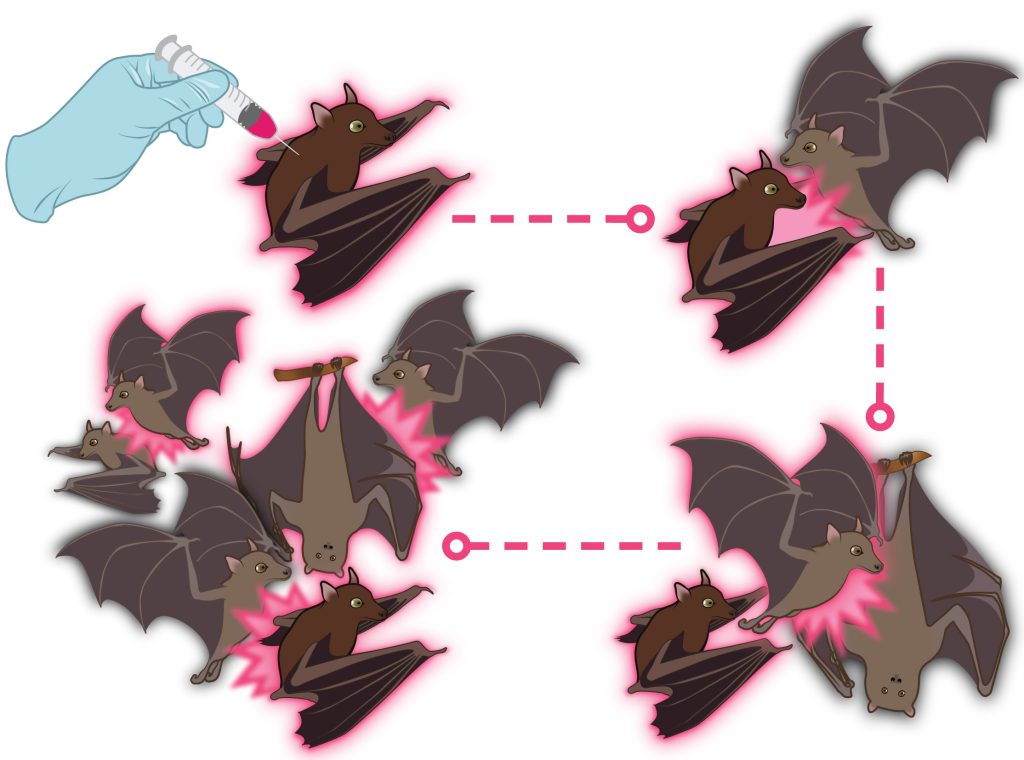
Vaccinating wildlife reservoirs could prevent spillover at source, but conventional campaigns cannot reach enough individuals in free-ranging populations to reduce transmission durably. Self-disseminating vaccines, engineered to spread between hosts, would relax that constraint, and equally would be difficult to recall once released.
This policy forum in Science, an output of an interdisciplinary workshop convened by Scott Nuismer and Daniel Streicker, sets out design commitments intended to keep the technology’s benefits ahead of its risks. Among them, transmissible constructs should be built from host-restricted vectors so they remain confined to the target species, the design should be intrinsically self-limiting, and field release should follow staged evaluation with the consent of affected communities.
The argument is that safety is a property of design choices made early, not of oversight applied late, and that the research community should commit to those choices now while candidate vaccines for rabies and Lassa fever are still in development.
Last updated 5 October 2026